Case Study
Watching a Market Instead of Reading About One
A trading floor and an ETF desk, seen firsthand in a single day of industry exposure — where liquidity, spreads, and hedging stopped being textbook words.
Context
Gabriel spent approximately six hours across Cboe and Wolverine, with two senior traders at Wolverine, including part of that time on the Cboe trading floor. This wasn’t a job and it wasn’t an internship; it was industry exposure, arranged through a family connection. The two halves covered different things: the trading floor itself, with one of the traders, and how an ETF actually works underneath its ticker, with the other.
The Cboe Floor, With a Wolverine Trader
On the floor: SPX options activity, open-outcry trading between people physically present, and electronic trading running at the same time in the same market — not one replacing the other. Noticeably less floor activity around VIX than around SPX. At one point, the trader communicated a price to another participant using a handheld device while working the floor. By that trader’s account in the moment, roughly 82% of the activity he pointed to that day was electronic rather than floor-executed — his own estimate, not an independently verified Cboe statistic, and it’s presented here as exactly that.
Gabriel didn’t trade, price, or execute anything himself, and none of what follows should be read as if he did. What made the floor worth writing about is narrower: several ideas that had only existed for him as chart patterns or as assumptions built into a research system — what liquidity means, why a spread exists — stopped being abstract once he could watch people actually making those decisions in real time, on a floor where the old way of trading and the new way are running simultaneously.
ETF Mechanics, With a Second Wolverine Trader
The second half of the day was a conversation, not a floor visit: how ETFs actually work underneath the ticker — creation and redemption, pricing and spreads, hedging, and what happens when a trade needs to be corrected. Gabriel discussed and was walked through these mechanics; he didn’t create or redeem any shares, execute a trade, or manage a position himself.
How Creation and Redemption Works
Background: this section provides general ETF-market context from SEC/Investor.gov sources, separate from Gabriel’s account of the conversation with the second trader.
ETF shares aren’t created the way a stock’s shares are. A small set of large financial institutions called authorized participants can deliver a basket of the ETF’s underlying securities to the fund and receive a large new block of ETF shares in return — a “creation unit” — or do the reverse to redeem shares. That direct exchange with the fund is the ETF’s primary market; almost all everyday buying and selling happens one step removed from it, on an exchange, in the secondary market, where an investor never deals with the fund itself. The creation/redemption link between the two is what keeps an ETF’s market price from drifting too far from the value of what it actually holds: if the ETF trades noticeably above or below that value, an authorized participant can profit by creating or redeeming shares to correct it, which is close to the arbitrage the spreads-and-hedging conversation was describing from the inside.
About the Wolverine Contacts
Both contacts are listed as Senior Traders at Wolverine on their public LinkedIn profiles — Wolverine’s own site does not publish an employee directory to independently confirm the title. Wolverine makes markets — providing continuous buy and sell quotes — across equities, options, futures, and ETFs, which is why a Wolverine trader has floor access at an exchange like Cboe.
Reflection
A market maker doesn’t think in terms of “will this go up or down” the way a directional investor does — the questions on the floor were about spread, size, and risk, not a prediction about price. That’s a genuinely different mental model than anything Gabriel’s own research work (JEC pitches, Han Insights analysis) had exposed him to before, and seeing it in person made the distinction clear in a way no explanation of it had.
Evidence
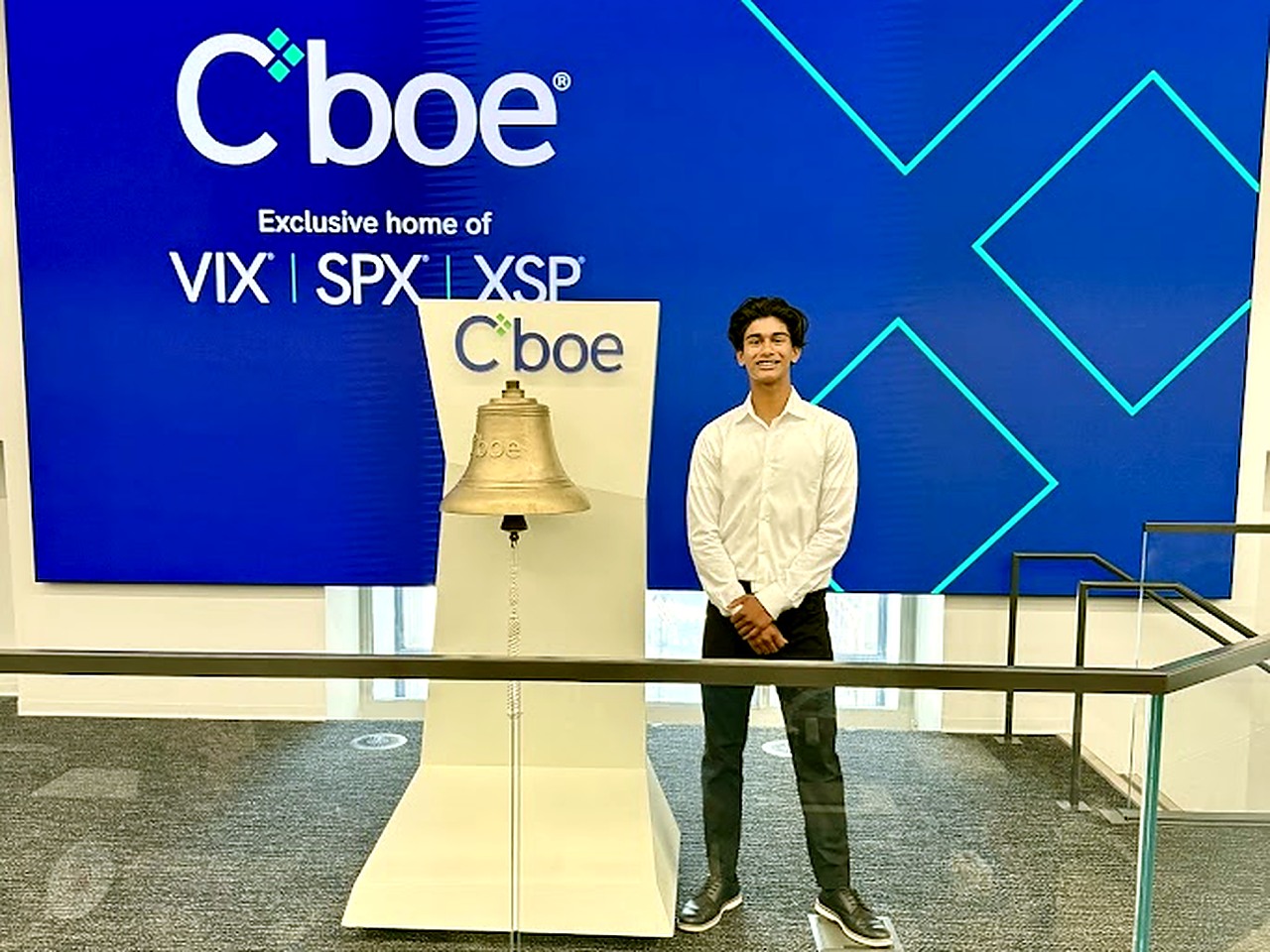
On the Cboe trading floor.

Visiting Wolverine.
Wolverine
Wolverine's own description of its market-making business — the firm both contacts below work for.
Authorized Participants — U.S. SEC, Investor.gov
Background source for the ETF creation/redemption explainer below.
Related Work
Algorithmic Trading Research System
The system tries to model, with rules, what this industry exposure showed him firsthand — how professionals actually judge a setup worth acting on.
A Portfolio Isn't Graded the Same Way a Fund Is
Wolverine's questions are about how the market and the trade itself work; Gresham's questions start from what an investor should own in the first place — two different jobs in the same broad industry.